AI in Healthcare (2026): What Works, What the Evidence Shows, and Where It Fails
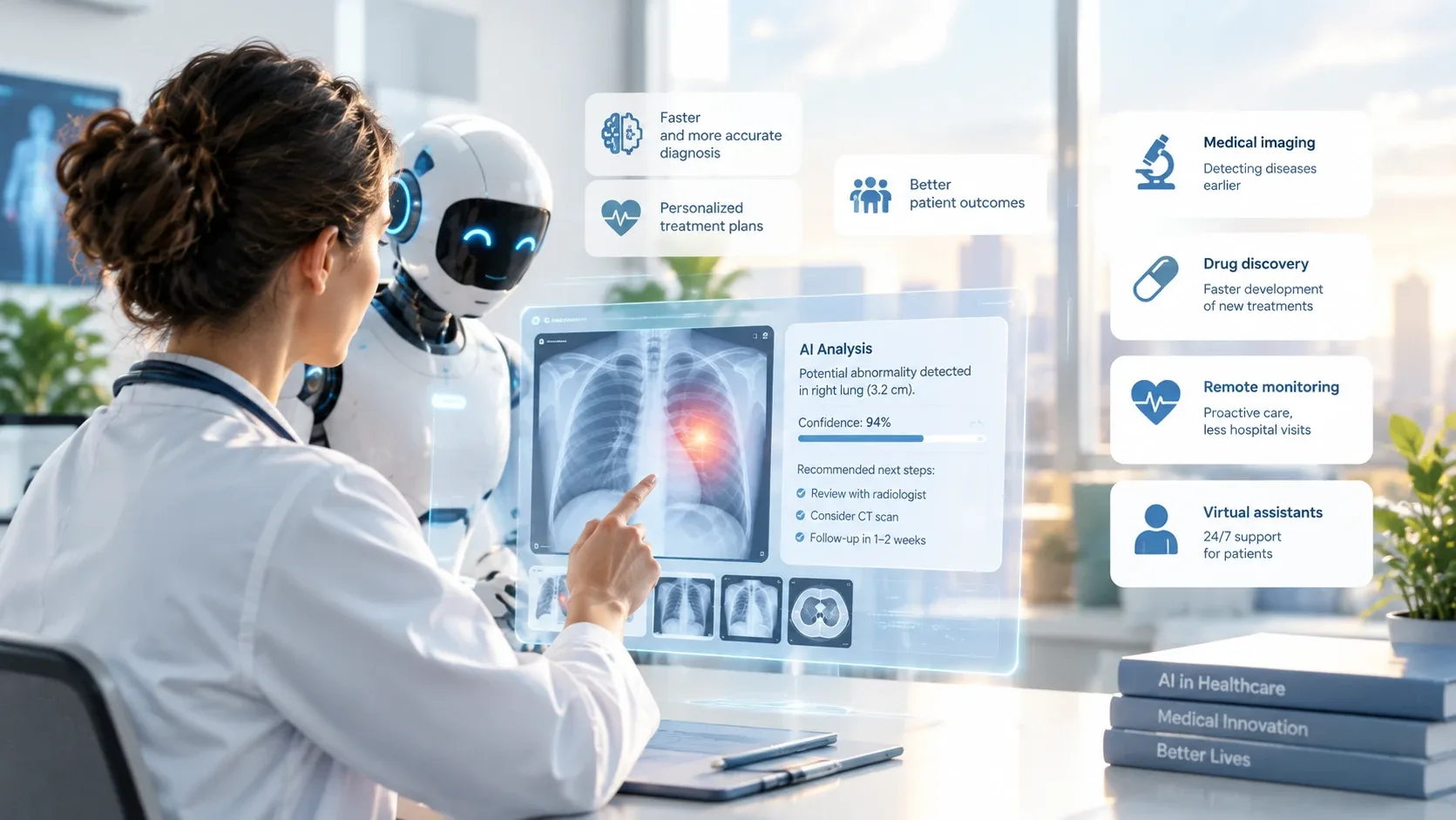
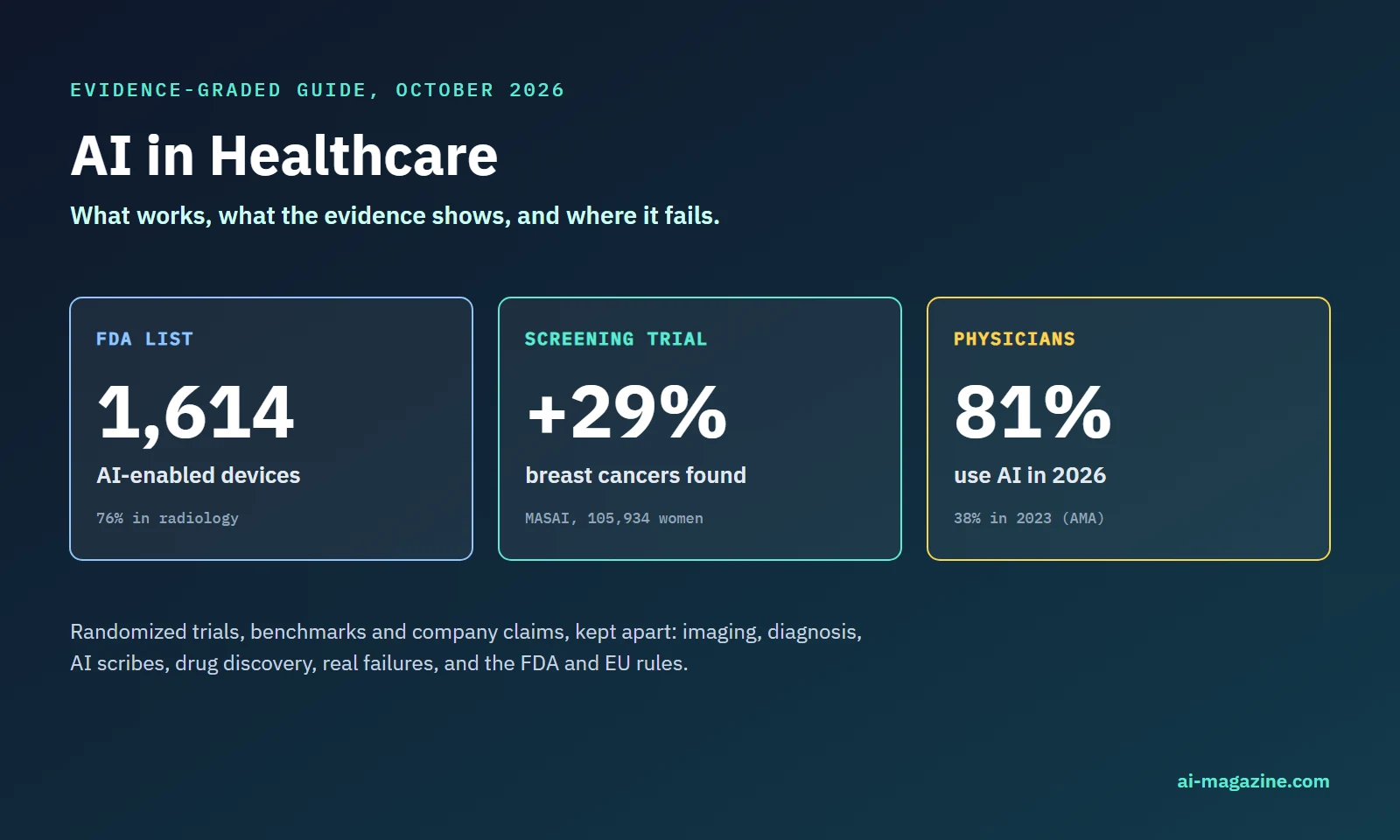
AI in healthcare is the use of artificial intelligence for medical tasks, from reading scans and drafting clinical notes to predicting which patients will deteriorate and designing new drugs. By 2026, the field has moved past the initial hype cycle into a phase of rigorous evaluation and regulatory scrutiny. According to the FDA, the agency’s AI-Enabled Medical Device List contains 1,614 devices as of 4 September 2026, with radiology accounting for 76% of them. Physician adoption has surged, with 81% of physicians using AI in 2026, up from 38% in 2023, according to American Medical Association surveys. Yet the Stanford AI Index 2026 found that only 2.4% of the AI devices the FDA authorized in 2025 had clinical studies supported by randomized trial data. This guide grades the evidence for each application, distinguishing between peer-reviewed randomized controlled trials, observational studies, academic benchmarks, and unverified company claims. It focuses on what the data shows, not on what vendors say a tool will do. Nothing here is medical advice.
How AI is used in healthcare
Artificial intelligence in healthcare is now embedded in nearly every stage of the clinical and administrative workflow. The following list summarizes the primary applications currently in use or under active investigation:
- Medical imaging: Computer vision algorithms analyze radiological images such as X-rays, CT scans, and MRIs to detect anomalies, prioritize urgent cases, or assist in diagnosis. This is currently the most validated area of AI medicine.
- Diagnosis support and triage: Algorithms help clinicians interpret patient symptoms, suggest differential diagnoses, or prioritize patients in emergency departments based on risk scores.
- Clinical documentation (ambient scribes): Ambient AI scribes listen to physician-patient conversations and automatically generate clinical notes, reducing the time clinicians spend on electronic health records.
- Prediction and early warning: Predictive models analyze real-time patient data to forecast risks such as sepsis, cardiac arrest, or hospital readmission before clinical signs become obvious.
- Drug discovery: AI helps identify new drug targets, predict protein structures and design new molecules, with the aim of shortening early-stage research.
- Patient-facing chatbots: Large language models provide health information, answer questions, and offer preliminary triage advice directly to patients through consumer applications.
- Administration and insurance: AI automates prior authorization, claims processing, and coverage decisions, often using algorithmic scoring to determine medical necessity.
How strong is the evidence?
The quality of evidence for AI in healthcare varies dramatically depending on the source. Benchmarks often show impressive accuracy, but they are conducted in controlled settings that may not reflect real-world clinical practice. Randomized controlled trials provide higher-quality evidence but are fewer in number and often limited in scope. Company claims, while frequent, are rarely independently verified. The table below categorizes the types of evidence you will encounter in this guide.
| Evidence type | What it shows | Example from this guide |
|---|---|---|
| Randomized controlled trial | Direct comparison of AI-assisted care vs. standard care, minimizing bias. | The MASAI trial for breast cancer screening (Lancet Digital Health, 2025). |
| Observational study | Real-world usage data without randomization; prone to selection bias. | The PRAIM study for breast cancer detection (Nature Medicine, 2025). |
| Benchmark/case challenge | Performance on curated datasets or simulated patient interactions. | Google AMIE performance on NEJM cases (Nature, April 2025). |
| Company claim | Proprietary data released by vendors; often lacks peer review. | Microsoft MAI-DxO results (company preprint, June 2025). |
Medical imaging: the strongest evidence so far

Medical imaging remains the area with the most robust evidence for AI in healthcare. The FDA’s AI-Enabled Medical Device List confirms this dominance: radiology is the lead review panel for 1,230 of the 1,614 devices on the list, about 76% of the list. This is followed by cardiovascular devices (154) and neurology devices (73). The oldest entries on the list date back to 1995, when Pap-smear screening systems received authorization. Despite this long history, the FDA notes that the list “is not a comprehensive resource,” meaning many AI tools in use may not be formally regulated as medical devices.
The first significant milestone was IDx-DR, which received De Novo authorization from the FDA on 11 April 2018. In the FDA’s words, it was “the first device authorized for marketing that provides a screening decision without the need for a clinician to also interpret the image.” The device detects diabetic retinopathy, a leading cause of blindness. Its pivotal study involved 900 patients and demonstrated a sensitivity of 87.4% and a specificity of 89.5%. It set the precedent for AI that makes a screening decision on its own.
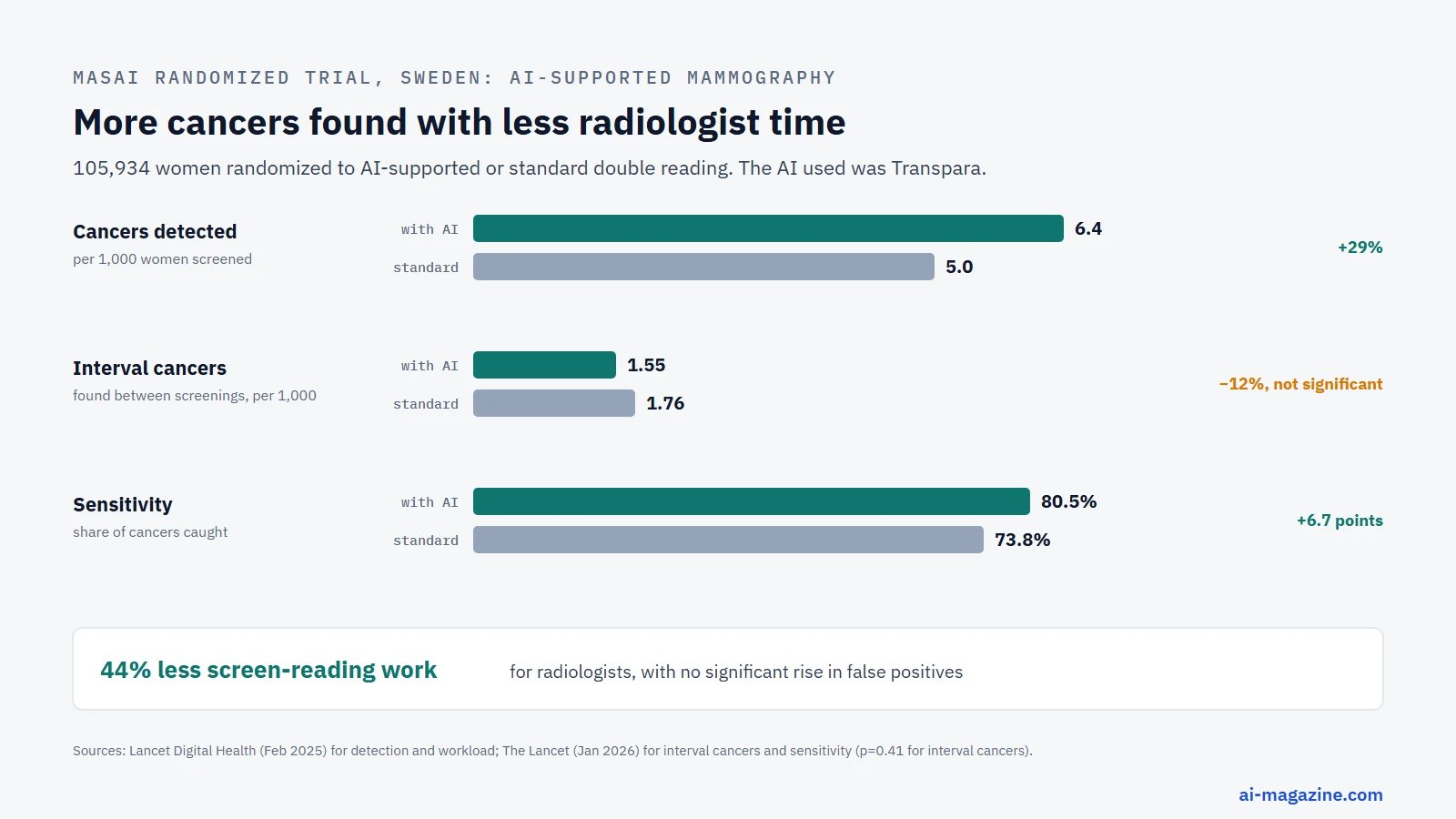
The most rigorous evidence for AI in radiology comes from the MASAI trial, published in Lancet Digital Health in February 2025. This randomized trial in Sweden involved 105,934 women undergoing breast cancer screening. The study found that AI-supported screening detected 6.4 cancers per 1,000 women, compared to 5.0 per 1,000 with standard screening—a 29% increase in detection. Crucially, this increase did not come with a significant rise in false positives. Additionally, the AI reduced radiologists’ screen-reading workload by 44%. A follow-up analysis published in The Lancet in January 2026 examined the primary endpoint of interval cancers—cancers found between scheduled screenings. The AI-supported group had an interval cancer rate of 1.55 per 1,000, compared to 1.76 per 1,000 in the control group. While this represents a 12% reduction, the result was not statistically significant (p=0.41). The sensitivity of the AI-supported group was 80.5% compared to 73.8% for the control group. These results suggest AI can improve detection and efficiency, but the evidence for reducing interval cancers is not yet conclusive.
In Germany, the PRAIM study published in Nature Medicine in January 2025 provided observational evidence. This was not a randomized trial; radiologists chose whether to use AI. The study included 463,094 women across 12 sites and involved 119 radiologists. The use of AI increased the detection rate by 17.6% (6.7 vs. 5.7 per 1,000) without increasing the rate of recalls. Because radiologists chose for themselves when to use the AI, differences between those readings and the others could explain part of the effect; the result is encouraging but weaker evidence than MASAI.
Real-world performance often differs from lab benchmarks. A study presented at CHI 2020 examined Google’s diabetic-retinopathy AI in 11 clinics in Thailand. In controlled settings, the AI performed well. However, in real clinics, poor lighting and image quality led to many images being rejected as ungradable. Our guide to image recognition algorithms explains why this gap between benchmark and clinic is common: AI models must handle the messy conditions of actual medical practice, not just clean datasets.
AI in diagnosis: beating doctors vs helping them
The narrative around AI in diagnosis often focuses on whether AI can “beat” doctors. Benchmarks suggest AI can outperform humans in specific, controlled tasks. However, real-world effectiveness depends on how AI assists clinicians and how patients interact with AI. The evidence is mixed, showing that AI is a tool that enhances some capabilities while introducing new limitations.
What the benchmarks say
Benchmarks test AI on curated datasets or simulated patient interactions. They often show high accuracy but may not reflect clinical practice. The Microsoft MAI-DxO system, reported in a June 2025 company preprint, scored 85.5% on 304 New England Journal of Medicine (NEJM) cases. In contrast, 21 physicians working without access to colleagues, textbooks, or generative AI scored 20%. This is a company claim, not a peer-reviewed study, and the comparison group was limited.
Google’s AMIE system was evaluated in two Nature papers published in April 2025. In a randomized double-blind study using patient-actors, AMIE was more accurate than 20 primary-care physicians and rated better on 30 of 32 specialist axes. However, the authors noted that these results “should be interpreted with caution” because text chat is not normal clinical practice. On 302 hard NEJM cases, AMIE alone achieved 59.1% top-10 accuracy, compared to 33.6% for unassisted clinicians. When clinicians were assisted by AMIE, their accuracy rose to 51.7%. This suggests AI can help, but the assistance is not automatic.
The HealthBench, launched by OpenAI in May 2025, graded 5,000 health conversations using rubrics written by 262 physicians from 60 countries. It is a useful benchmark for comparing models, but it is not a clinical study, and no patients were treated.
Doctors with AI are not automatically better
Having access to AI does not guarantee better outcomes. A randomized trial by Goh et al., published in JAMA Network Open in October 2024, involved 50 physicians. Doctors using GPT-4 scored 76% on diagnostic reasoning, compared to 74% for those using conventional resources. The difference was not statistically significant. However, GPT-4 alone scored 16 percentage points higher than the conventional-resources group. This suggests that while AI is capable, human-AI collaboration requires skill and integration to realize benefits.
Patients using chatbots
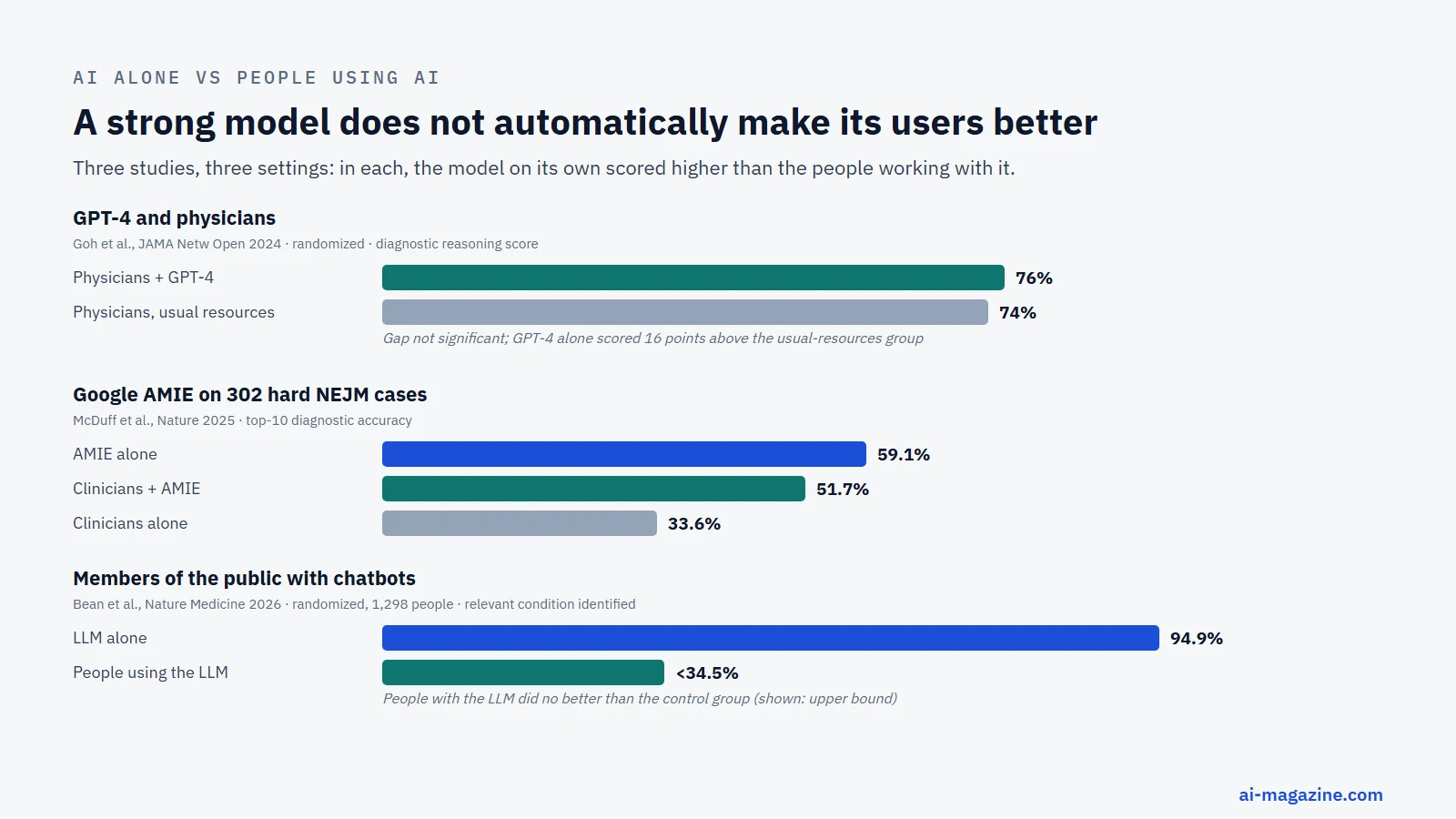
Patients are increasingly using AI for health information, but their ability to interpret it correctly is limited. A randomized study from Oxford University, published in Nature Medicine in February 2026, involved 1,298 participants. Tested on their own, the LLMs identified the relevant conditions in 94.9% of cases. However, members of the public using the same LLMs identified conditions in fewer than 34.5% of cases and chose the right course of action in fewer than 44.2%. Their performance was no better than the control group. The bottleneck was the conversation between person and model, not the model’s medical knowledge.
OpenAI reports that over 230 million people ask ChatGPT health questions every week, as of January 2026. The company launched ChatGPT Health and states it “is not intended for diagnosis or treatment.” Importantly, HIPAA does not cover data people give to consumer apps, raising privacy concerns. While AI chatbots are widely used, they are not a substitute for professional medical advice, and they can hallucinate (why LLMs make things up).
Ambient AI scribes: less paperwork, modest time savings

Ambient AI scribes have become one of the most visible clinical AI tools, yet the evidence suggests their impact on daily workflow is nuanced. The technology listens to patient encounters and generates clinical notes, but the actual time saved and the reliability of the output vary significantly by setting.
A large-scale study from The Permanente Medical Group at Kaiser Permanente provides the most robust data on scale. Published in NEJM Catalyst in 2025, the study tracked 7,260 physicians across over 2.5 million encounters during a 63-week period. The researchers calculated that the scribes saved an estimated 15,791 hours, which translates to roughly 1,794 working days. By our calculation, that is about 22 seconds saved per encounter. While this sounds modest, the cumulative effect on physician schedules is measurable.
Other randomized trials have shown mixed results regarding pure time efficiency. A study published in NEJM AI in November 2025 by researchers at UCLA involved 238 physicians. They found that one specific scribe product reduced time spent on documentation by 9.5%, while another product showed no significant effect on time. Burnout measures improved, but these were secondary endpoints that need confirmation. Similarly, a stepped-wedge randomized trial at the University of Wisconsin, also published in NEJM AI in November 2025, included 66 clinicians. It found that work exhaustion fell and documentation time decreased without a drop in note quality.
Despite these benefits, inaccuracies remain a concern. The UCLA trial noted that clinically significant inaccuracies occurred occasionally, requiring physician review. An observational study in JAMA Network Open (October 2025) involving 263 clinicians at six health systems reported that burnout fell from 51.9% to 38.8% after just 30 days of use, but it did not detail error rates. The trade-off is clear: ambient scribes may reduce administrative burden and improve well-being, but they do not eliminate documentation work. Physicians still must verify the generated notes, and the time savings are often incremental rather than transformative.
AI in drug discovery

The application of AI in drug discovery has moved from theoretical promise to tangible clinical milestones, largely driven by advances in protein structure prediction. The 2024 Nobel Prize in Chemistry recognized Demis Hassabis and John Jumper from Google DeepMind for their work on AlphaFold, and David Baker for computational protein design. AlphaFold2 predicted the structure of virtually all 200 million known proteins and has been used by more than two million people from 190 countries. AlphaFold 3, released in May 2024, extended this capability to model complexes with DNA, RNA, and small molecules, accelerating the initial stages of target identification.
A notable clinical example is rentosertib, developed by Insilico Medicine. Published in Nature Medicine in June 2025, the phase 2a trial for idiopathic pulmonary fibrosis included 71 patients over 12 weeks. This was described as the first drug where both the target (TNIK) and the molecule were generated by generative AI. The results showed that lung function (FVC) rose by 98.4 mL on the highest dose, compared to a 20.3 mL fall in the placebo group. Safety profiles were similar to placebo. The authors noted that larger, longer trials are needed to confirm efficacy.
Broader trends support the potential of AI in early-stage development. A BCG/Wellcome analysis published in Drug Discovery Today in 2024 found that AI-discovered molecules had an 80–90% success rate in phase I trials and about 40% in phase II, based on a small sample. The sample is small, so these rates may change as more AI-derived drugs reach later trials.
Isomorphic Labs, a subsidiary of Alphabet, represents the commercial side of this shift. The company raised $2.1 billion in May 2026 and stated that its first clinical trials are expected by the end of 2026. While the pipeline is promising, it is early to declare AI a definitive shortcut to drug approval. The rentosertib trial, while successful in phase 2a, requires further validation. The field is moving fast, but clinical proof remains the ultimate test.
When healthcare AI fails
AI systems are not infallible. They fail when data is biased, when models are overfitted to specific environments, or when clinical context is lost. Understanding these failures is critical for clinicians and health-tech managers.
The sepsis model that missed two-thirds of cases
The Epic Sepsis Model is one of the most widely deployed clinical decision support tools in US hospitals. A study published in JAMA Internal Medicine in 2021 analyzed 38,455 hospitalizations. The model had an area under the curve of 0.63, where 0.5 is a coin toss and 1.0 is perfect. More critically, it missed 67% of sepsis patients while alerting on 18% of all hospitalized patients. This high false-positive and false-negative rate can lead to alert fatigue or missed diagnoses, depending on the clinical setting. The lesson for hospitals: validate a model on your own patients before trusting its alerts.
Bias built into the data
Bias in AI often stems from the data used to train it. A landmark study by Obermeyer et al., published in Science in 2019, examined a widely used algorithm designed to identify patients who would benefit from extra care management programs. The algorithm used healthcare costs as a proxy for health needs. Because Black patients historically had lower healthcare costs due to systemic inequities, the algorithm underestimated their needs. The study found that fixing this bias would raise the share of Black patients flagged for extra help from 17.7% to 46.5%. This example illustrates that even well-intentioned algorithms can perpetuate inequality if the underlying data reflects historical disparities.
IBM Watson for Oncology
IBM Watson for Oncology was marketed as a revolutionary AI tool for cancer treatment recommendations. However, internal documents reported by STAT in 2018 revealed that Watson recommended “unsafe and incorrect” cancer treatments in some cases. IBM eventually sold its Watson Health data and analytics assets in 2022 to Francisco Partners, which rebranded the business as Merative. The case serves as a cautionary tale about overhyped AI promises and the challenges of integrating AI into complex clinical workflows.
Insurance algorithms in court
AI is also used in healthcare insurance to make coverage decisions. A lawsuit filed in November 2023 against UnitedHealth and its subsidiary naviHealth alleged that the nH Predict algorithm was used to deny coverage. Plaintiffs claimed that coverage denials based on the algorithm were overturned in more than 90% of appeals. UnitedHealth denied using the tool to make coverage decisions and stated that the suit has no merit. The case is ongoing. This highlights the tension between algorithmic efficiency and individual patient needs, especially when the algorithm’s decision-making process is opaque.
| Case | Year | What went wrong | Lesson |
|---|---|---|---|
| Epic Sepsis Model | 2021 | Missed 67% of sepsis cases while alerting on 18% of patients | Validate locally before trusting alerts |
| Obermeyer Algorithm | 2019 | Used costs as a proxy for need, biasing against Black patients | Data reflects historical inequities; proxy variables matter |
| IBM Watson for Oncology | 2018 | Internal documents cited “unsafe and incorrect” treatment recommendations | Marketing ran ahead of evidence; demand clinical validation |
| nH Predict (UnitedHealth) | 2023 | Lawsuit alleges denials were overturned in 90%+ of appeals (UnitedHealth disputes it) | Opaque coverage algorithms invite legal challenges |
Rules and regulation
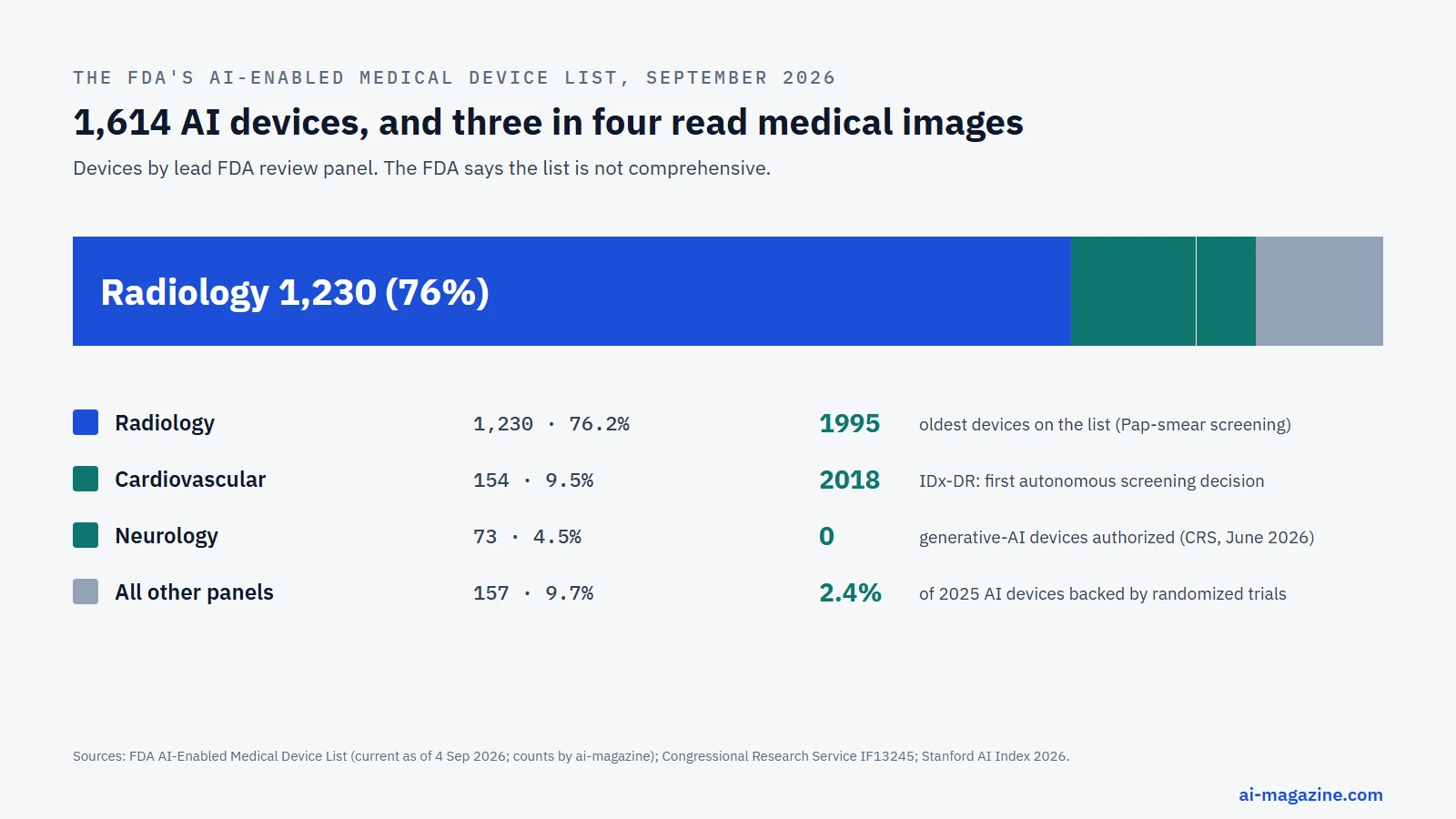
Regulation of AI in healthcare is fragmented and evolving. In the United States, the FDA regulates AI that qualifies as a medical device; its public list held 1,614 such devices in September 2026.
The FDA authorized 258 AI medical devices in 2025, according to the Stanford AI Index 2026. However, only 2.4% of these devices had clinical studies supported by randomized trial data. This highlights a gap between regulatory approval and robust clinical evidence. The FDA finalized guidance on Clinical Decision Support Software in January 2026 and updated its Predetermined Change Control Plans (PCCP) in August 2025. PCCPs allow manufacturers to pre-approve how a model will be updated, facilitating iterative improvements without full re-review. Notably, a Congressional Research Service report in June 2026 stated that the FDA “does not appear to have authorized for marketing any generative AI (genAI)-enabled device” yet.
The European Union is taking a different approach. The EU AI Act designates AI that is part of a medical device requiring third-party conformity assessment as high-risk. After the 2026 “Digital Omnibus” amendment, these obligations apply from 2 August 2028.
Other regulatory bodies and laws are also shaping the landscape. The World Health Organization issued guidance on large multimodal models in health in January 2024, providing over 40 recommendations. In the US, state laws are emerging. California’s AB 3030, effective January 2025, requires patient communications generated by generative AI to carry a disclaimer and instructions to reach a human, unless reviewed by a licensed provider. Illinois banned the use of AI to provide mental-health therapy or therapeutic decision-making in August 2025, with fines up to $10,000. Texas passed laws in 2025–2026 requiring practitioners to disclose AI use in diagnosis/treatment and to review AI-generated records.
The US anti-discrimination rule (HHS Section 1557), with compliance from May 2025, covers “patient care decision support tools”, including AI. HIPAA does not cover data given to consumer apps, which is a significant gap for popular health chatbots. Note: this is not legal advice. Regulations change rapidly; consult legal counsel for specific compliance needs.
What to look for before trusting a healthcare AI tool
Before adopting or using an AI tool in a clinical setting, consider the following checklist:
- Regulatory status: Is the device cleared or approved by the FDA or another regulatory body? Check the FDA AI-Enabled Medical Device List. Note that clearance does not equal robust clinical evidence.
- Evidence type: What kind of studies support the tool? Look for randomized trials or large observational studies. The Stanford AI Index 2026 notes that only 2.4% of FDA-authorized AI devices have randomized trial data. Be skeptical of tools with only small or observational studies.
- Tested on your patient population: Did the study include patients similar to yours? The Epic Sepsis Model failed in some settings because it was not validated locally. Ensure the training data reflects your demographic and clinical context.
- Bias checks: Has the tool been tested for bias? The Obermeyer study showed how cost-based proxies can bias outcomes. Ask vendors about bias audits, especially for demographic variables.
- Human oversight and accountability: Who is responsible for the AI’s output? Ambient scribes still require physician review. Ensure there is a clear workflow for human verification.
- Monitoring after deployment: How is the tool’s performance tracked post-launch? PCCPs allow for pre-approved updates, but continuous monitoring is essential to detect drift or new biases.
- Data protection: How is patient data used? HIPAA may not cover consumer apps. Ensure data privacy policies align with your institution’s standards.
- Disclosure to patients: Are patients informed when AI is used? California’s AB 3030 requires disclaimers for AI-generated communications. Transparency builds trust.
This checklist is a starting point. Evaluate each tool on its own merits, considering the specific clinical context.
FAQ
How is AI used in healthcare today?
AI is used in medical imaging, drug discovery, clinical documentation, and diagnostic support. The FDA’s AI-Enabled Medical Device List as of September 2026 contains 1,614 devices, with radiology being the largest category. AI scribes are also being adopted to reduce physician burnout, with studies showing modest time savings and improved well-being.
Is AI better than doctors at diagnosis?
AI can outperform doctors in specific, controlled tasks. For example, Google’s AMIE scored higher than 20 primary-care physicians in a randomized text-chat study (Nature, April 2025). However, these results often come from idealized conditions. In real-world settings, AI’s performance depends on data quality and clinical context. AI is a tool, not a replacement for clinical judgment.
Will AI replace doctors?
There is no evidence that it will. AI performs well on narrow tasks such as reading scans, but the trials above show that results depend on how people use it, and regulators require human oversight for clinical decisions. Studies show AI can assist doctors, improving efficiency and accuracy, but it does not replicate the full scope of medical practice. The AMA reports that 81% of physicians used AI in 2026, suggesting integration rather than replacement.
Is AI in healthcare safe?
AI can be safe if properly validated and monitored. However, failures like the Epic Sepsis Model’s high false-negative rate or IBM Watson’s incorrect cancer recommendations show risks. Safety depends on rigorous testing, bias mitigation, and clear accountability. Regulatory bodies like the FDA and EU are developing frameworks to ensure safety, but oversight is still evolving.
What are the main risks of AI in healthcare?
Key risks include bias (e.g., underestimating needs for Black patients in the Obermeyer study), lack of transparency (black-box algorithms), data privacy issues (especially with consumer apps not covered by HIPAA), and over-reliance on AI without human oversight. Algorithmic errors can lead to misdiagnosis or inappropriate treatment.
Is AI in healthcare regulated?
Yes, but regulations vary by region and technology. The FDA regulates AI-enabled medical devices, with 1,614 devices listed as of September 2026. The EU AI Act will impose high-risk obligations from August 2028. State laws in California, Illinois, and Texas are adding specific requirements for AI use in patient communications and therapy.
Can I use ChatGPT for medical advice?
ChatGPT is not intended for diagnosis or treatment, according to OpenAI. A 2026 Oxford study found that while LLMs could identify conditions in 94.9% of cases, the public using them identified conditions in fewer than 34.5% of cases. It is useful for general information but not a substitute for professional medical advice, especially for complex or urgent conditions.
How many AI medical devices has the FDA approved?
As of 4 September 2026, the FDA’s AI-Enabled Medical Device List contains 1,614 devices. In 2025 alone, the FDA authorized 258 AI medical devices, according to the Stanford AI Index 2026. However, only 2.4% of these devices had clinical studies supported by randomized trial data.