People Are Blurring Their Fingers in Selfies. Can AI Really Steal Your Fingerprints From a Photo?
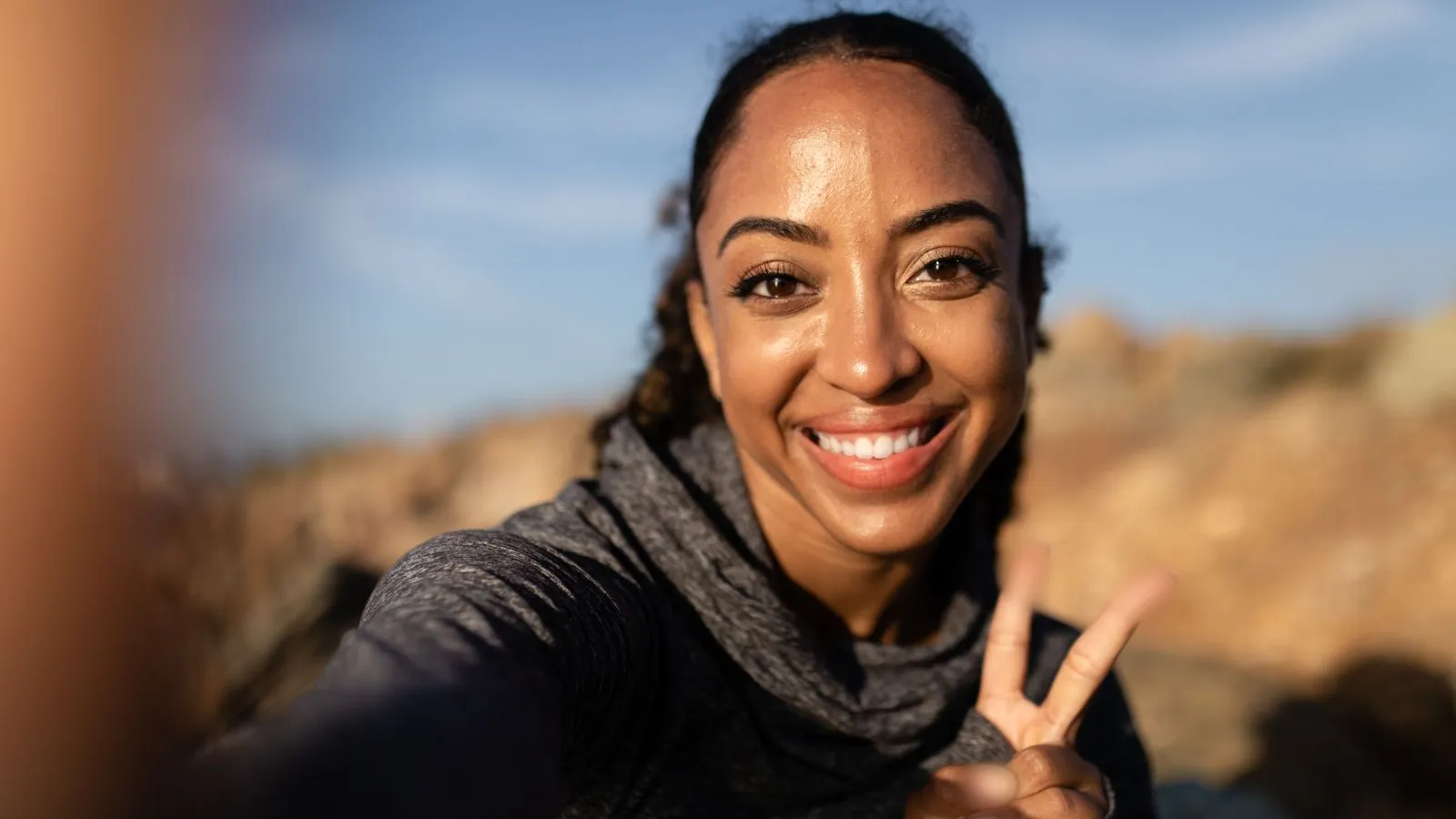
Blur your fingertips before you post that peace-sign selfie: that advice has been circulating since a Chinese television show in April 2026 demonstrated how a celebrity’s V-sign photo could be enhanced to reveal fingerprint ridges. Within weeks the warning spread to news outlets across Asia, Europe and the US, to Ukrainian media and to a sheriff’s advisory in Oklahoma, and some users began blurring, cropping or turning their fingertips away in photos. No one has measured how widespread the habit is. The core claim is simple: if you post a high-resolution close-up of your hand, artificial intelligence could reconstruct your biometric data and unlock your phone. The short answer: copying a print from a sharp, close photo has been done, but turning it into a fake that unlocks a modern phone is slow, hard work, and the attacker also needs the phone itself. For most people the risk is very low, and blurring is a cheap precaution rather than a necessity.
Where the scare came from
The current wave of concern began in April 2026. On a Chinese workplace television program, financial expert Li Chang used a celebrity’s peace-sign selfie. He applied photo-editing and AI enhancement tools to sharpen the ridges of the fingerprint visible in the image. His claim, reported by the Korea Herald on May 13, 2026, was specific: if a camera is within about 1.5 meters with the fingertips facing the lens, there is a high possibility the print can be extracted. At a distance of 1.5 to 3 meters, about half the detail can still be recovered. He advised viewers to blur, pixelate, or smooth their fingertips before posting images online.
This was not the first time this specific warning circulated. VICE noted that the warning “has circulated since at least 2017”. In September 2019, Zhang Wei of the Shanghai Information Security Industry Association had already claimed these same distance metrics, though without a live demonstration. On 2 May 2026, Professor Jing Jiwu of the University of Chinese Academy of Sciences told China’s The Paper that a better camera shooting a single-person portrait “may be able to” restore fingerprints. Meanwhile, Pei Zhiyong of the Qianxin Industry Security Research Centre told the Korea Herald that not every selfie is a risk; it requires suitable lighting, focus, distance, and image quality. “It’s safer not to share too many photos showing your fingers online,” he said.
The story spread rapidly. VICE covered it on May 13, 2026, and CBS News covered the story on June 1, 2026. In the United States, the Wagoner County Sheriff’s Office in Oklahoma issued a “selfie fingerprint” advisory on June 1, 2026, urging residents not to post fingertip close-ups, though they reported no confirmed local cases. Ukrainian outlets, including Mezha.ua on May 15 and Vikna on June 13, retold the story. Euronews had previously fact-checked a similar viral video in April 2024, concluding that while technically possible, it was very unlikely in practice.
It has been done before
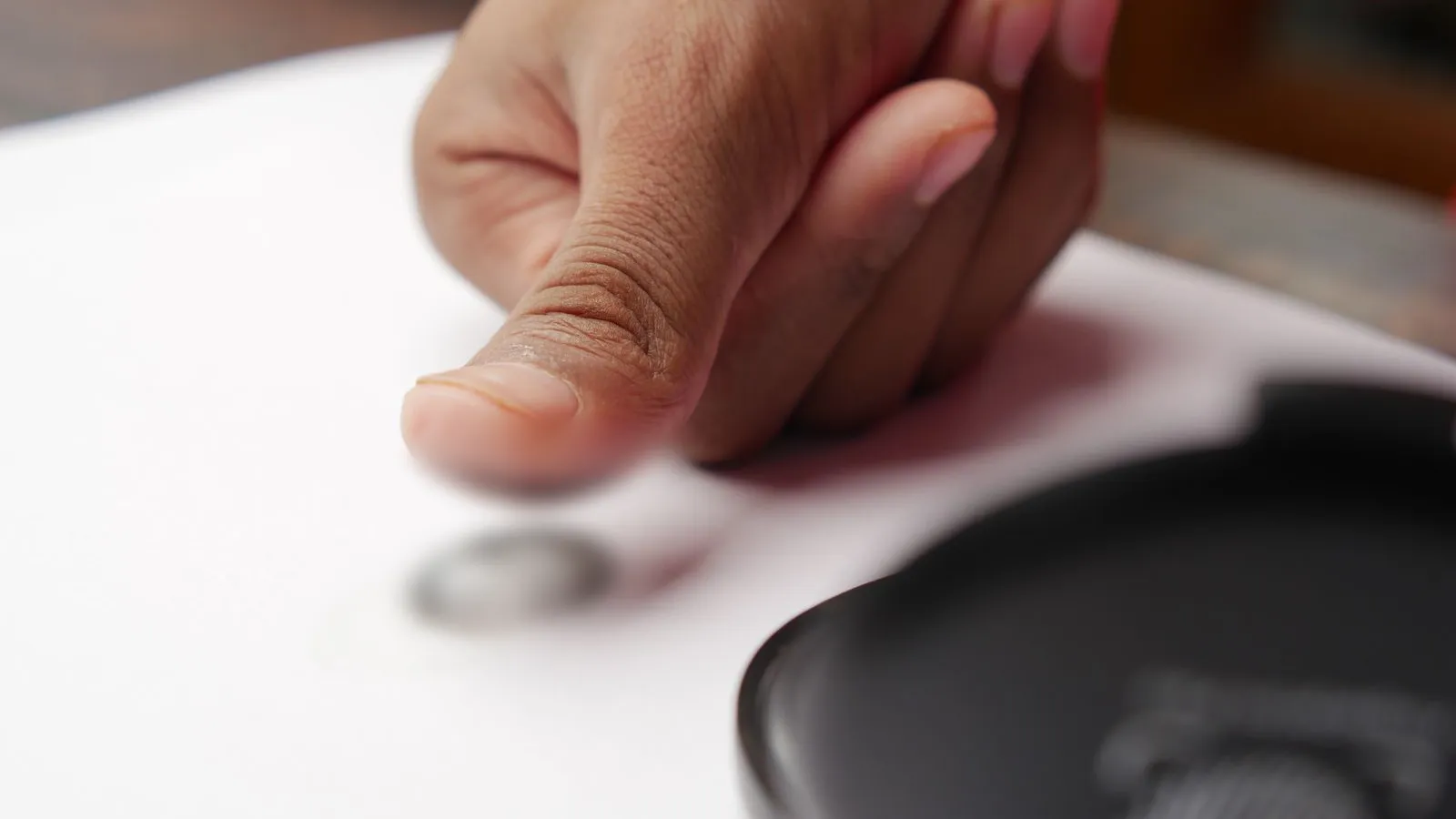
Copying fingerprints with a camera is not new. The best-known early demonstration came on September 22, 2013, two days after the iPhone 5s launched. Members of Germany’s Chaos Computer Club (CCC) beat Apple’s Touch ID. They took a fingerprint left on a glass surface, photographed it at 2400 dpi, laser-printed the image, and cast it in latex or wood glue. That fake came from a print left on a surface, not from a photo of a hand. Hacker Starbug, a CCC member, said fingerprints “should not be used to secure anything.”
The following year, on December 27, 2014, at the CCC congress in Hamburg, Starbug showed he had recreated German Defence Minister Ursula von der Leyen’s thumbprint from press photos taken a few metres away with a telephoto lens. He used commercial VeriFinger software to achieve the match. Whether the copy matched her real thumb was never confirmed.
In January 2017, Isao Echizen of Japan’s National Institute of Informatics reported that his team could copy fingerprints from photos taken about 3 metres away if the fingers were in focus under strong light. “Just by casually making a peace sign in front of a camera, fingerprints can become widely available,” Echizen said. His team proposed a transparent film for fingertips to block this vulnerability.
More recently, in May 2021, UK Merseyside Police identified drug dealer Carl Stewart from his fingerprints in an EncroChat photo of him holding a block of Stilton cheese. He was jailed for 13 years and six months. It is crucial to note that this was police matching a photo against a criminal database, not an attacker using the print to unlock a device.
What AI changes, and what it doesn’t
The April 2026 TV demo used unnamed AI enhancement tools to sharpen ridges that were previously too faint to read. This visual enhancement makes the extraction process easier for humans or automated scripts. However, AI has also been used in different ways. The 2018 “DeepMasterPrints” study by researchers at New York University and Michigan State University used AI to generate synthetic “master” prints that matched 23% of subjects at a 0.1% false match rate on phone-style partial prints. This method does not copy a real person’s print from a photo; it generates synthetic partial prints that happen to match many people, a kind of skeleton key for weak sensors.
Contactless matching from photos has also been studied. Michigan State’s C2CL system (2021–2022) matched close-up smartphone finger photos to contact prints in 96.7–98.3% of cases at a 0.01% false accept rate. However, these tests used deliberate, cooperative close-ups, not casual party selfies. As of October 2026, no peer-reviewed study has shown that generative AI can build a sensor-beating fingerprint from an ordinary social-media photo.
Social networks also compress images, which destroys fine detail. Sarah Morris of the University of Southampton told Euronews in 2024 that extracting a print needs “very specific conditions”, and compression on social networks lowers the risk further. Some researchers have proposed automatic “privacy filters” like FingerSafe (2022), which adds subtle noise to ridge patterns to confuse extraction algorithms. An indie app on Product Hunt called TESAKI HOGO offers on-device AI that detects and blurs fingerprints, though its effectiveness remains untested.
How hard it is to use a stolen print
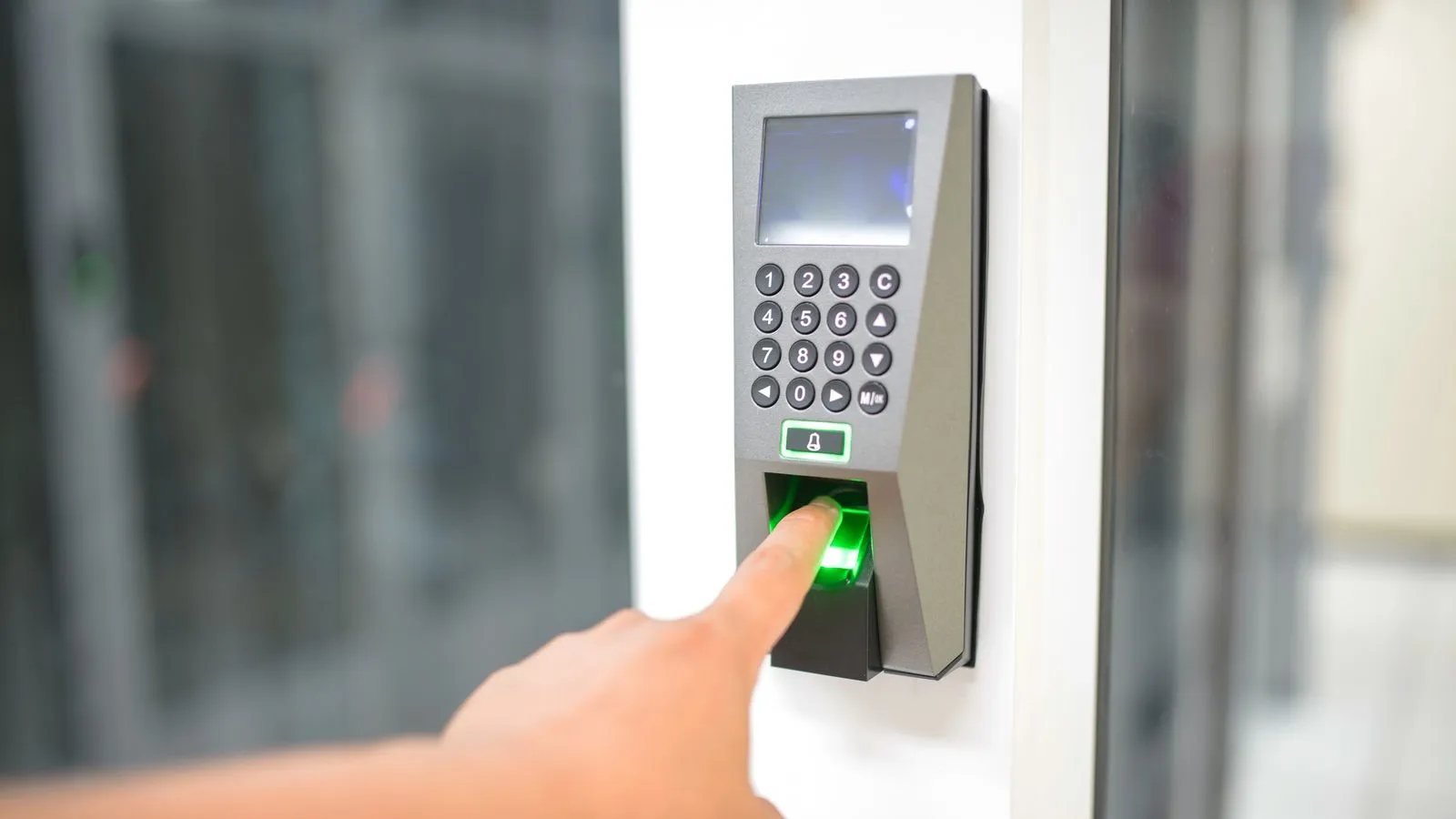
Even if you extract a perfect print from a photo, using it to unlock a phone is difficult. Cisco Talos reported in April 2020 that fake fingerprints fooled phone sensors about 80% of the time on average and a MacBook Pro about 95%. Windows Hello devices were never fooled. Crucially, creating those fakes took more than 50 moulds over several months. Talos concluded that “it is not possible to create a fingerprint copy on-demand and quickly.”
Modern sensors also check whether they are touching a live finger. Apple says the chance that a random person unlocks Touch ID is 1 in 50,000, and the passcode is required after five failed attempts, after a restart, or if the phone has not been unlocked for 48 hours. An attacker also needs physical access to your device. Vyas Sekar of Carnegie Mellon told CBS: “In theory, it’s possible, especially if people are posting high-resolution images.” Justin Cappos from NYU noted, “You have a better chance of being hit by a car tomorrow than this happening to you in your lifetime.”
What to do
You do not need to panic, but you can take simple steps if you are concerned.
- If you post high-resolution close-ups of your hands, blur or angle your fingertips. It is cheap and harmless.
- Keep a strong passcode or PIN. Treat fingerprints as a convenience, not a secret. The US National Institute of Standards and Technology (NIST) puts it bluntly: “Biometric characteristics do not constitute secrets”, and says a non-biometric option should always be available.
- If you are a likely target (a politician, executive or journalist), do not rely on a fingerprint alone: Cisco Talos advises strong passwords and hardware two-factor tokens.
- Remember that the bigger real-world risk is database leaks. The 2015 US OPM breach exposed 5.6 million federal fingerprint records, and the 2019 BioStar 2 exposure involved over 1 million people.
- Be aware that fingerprints cannot be changed. Unlike a password, your biometric data is static once compromised.
For other ways AI is used to impersonate people, see our explainer on deepfakes.